Showing posts with label science. Show all posts

Tuesday, September 29, 2020

The NASA Equation

NASA gives a lot more than it gets. After working at Johnson Space Center for 13 years, I saw first hand the great engineering and technological advances developed there and then sent out to the business section. It is part of the NASA charter.

In fact, a recent NASA Agency report explains, "NASA generated more than $64.3 billion in total economic output during fiscal year 2019, supported more than 312,000 jobs nationwide, and generated an estimated $7 billion in federal, state, and local taxes throughout the United States."  This was all gained from NASA's budget of 1/2 of 1% of the federal budget. Awesome return on investment.

NASA has 10 centers operating across the U.S. and its economic impact is not just limited to states with NASA facilities. All 50 states receive economic gain from NASA’s research and space exploration missions.

It is one of the high points of this wildfire burning, Midwest flooding, hurricane spawning, 2020 pandemic "new normal." So, let's look to the stars for some positive relief and hope that next year we have a science data and aerospace driven outlook with less worries, better health, and a trustworthy COVID-19 vaccine that works. 

Stay healthy and remember to vote. Go science!

Sunday, August 25, 2019

Curiosity and The First Day of School

Most of the time, people are resistant to change. We like the comfortable, "I have this down" feeling that comes with time and repeated experiences. 

I was thinking about this aversion to change while sitting in the slowed traffic that comes with the start back to school. I drive past 2 schools on my way to work, so I get to see eager students in their new clothes saying good-bye to caring, committed, and/or harried parents trying to get to work on time.

Well, okay maybe the older students are not so eager. But mostly, the young ones are excited to see friends they missed over the summer months. 

Why aren't they all equally excited?

I believe young children are still mostly information sponges. They ask why a million times a day (or so it seems). Change is their watchword, their motto, their way of life. It isn't until much later - after a few failures or someone older said an idea was impossible - that curiosity dims and change becomes something to be avoided. 

So the next time you talk with friends, parents, and colleagues, think about that. Curiosity is important! We need to nurture and celebrate it not just on the first day of school, but every day. Curiosity and asking why are the foundation of the scientific method. Go Science!

Thursday, October 11, 2018

International Observe the Moon night

Okay, vacations and summer heat behind us, it's time to get back to science. In this case, space science that anyone, any age, can do - moon observations.

The October 20, 2018 event is the International Observe the Moon Night. This worldwide focus on lunar science and exploration, held since 2010 takes place in Sept. or Oct. annually.

It's a chance to learn about our most observed neighbor and later allow you to offer up lunar factoids at everything from kids' birthday to cocktail parties (well ones where all your space science friends attend). 

This year also marks the 50th year anniversary of Apollo 8 visiting the moon and creates a chance to talk about past, present, and future lunar and planetary science and exploration. Plus, we can celebrate all the scientists/engineers who participated and shared in this tremendous human achievement.

Want to join the fun? Check out NASA's 2018 Moon Maps of how the Moon will appear on International Observe the Moon Night from the northern and southern hemispheres. Go science!

Tuesday, March 27, 2018

NASA Spinoffs

Some folks wonder if space exploration is "worth it." (Not me or anyone I know, but some.) I believe it's because for decades, NASA was not great at advertising its amazing technologies. Not exactly a strength (or even of interest) to most scientists and engineers.

When I worked at Johnson Space Center, I became aware of NASA accomplishments (besides launching rockets and building an international space station) through the annual NASA Spinoffs book that employees received.

You can read the online 2018 edition or download a copy here. It's amazing all the science and technology we take for granted that originated within the NASA space program. If you want a comprehensive look at NASA spinoffs, check out the NASA Spinoff Database which contains abstracts of all Spinoff articles published since 1976.

Next time you hear someone asking the question of what has NASA done for me, direct them to these resources. Go science!

Friday, March 9, 2018

Get Your Science (and STEM) On!

I believe that scientists and engineers are very creative people. There is logic involved in the scientific method, but that creative spark or "aha!" moment often sets someone down a path of amazing discovery and innovation. 

So, to honor my creative/science self and have a ton of fun too, I created an Amazon Merch account for STEM t-shirts. Amazon lets you search by  key words. Some of mine are: science, Semper Sci, engineering, Latin, Carpe ipsum, physics, nature, inventor, and earth. 

I also created a science t-shirt Pinterest board. If you are looking to celebrate science, technology, engineering, and math (STEM), as well as famous scientists, inventors, Earth Day, the Physics of Love, and more, check it out!

For March, I created a St. Patrick's Day t-shirt celebrating, Samuel O'Reilly, Irish Inventor who created the first electric tattoo machine. Who knew?!  In the future, I hope to highlight inventors from lots of different countries around the world. Go science!

Friday, July 7, 2017

3D Printed Yeast - Brew a glass at a time

I have been interested in 3D printing and all it ramifications for several years. I've even written about it in the Manufacturing Engineering Handbook (see Chapter 15) and have attended national conferences that had me spellbound. 

Today, I came across a breakthrough that everyone can get behind - 3D printed yeast in a tiny lattice bioreactor that keep fermenting glucose forever! (At least they have been going for months and months with no slowing down.)

Dr. Alshakim Nelson and his lab group in the Chemistry dept. at the University of Washington have created ethanol from the 3D printed yeast-infused 1 cm structures and plan to try other substances like proteins or even drugs. 

The question to run on the heels of this discovery is, "Can yeast added to a hydrogel cube be put into fruit juice and it will convert the sugar in the drink to alcohol?" You could brew your own alcoholic beverages in a matter of hours or overnight! For lightweight drinkers like me, you could stop the process at just the alcohol level you want. Science win! And who says the basic sciences don't work for the common good? Go Science!

Tuesday, April 25, 2017

Congrats Peggy Whitson!

As you might remember, I worked at NASA-Johnson Space Center for several years and was privileged to know and work alongside incredibly talented and courageous scientists, engineers, computer scientists and astronauts. One of those was Peggy Whitson who now holds the longest total combined time in space of any human. Peggy is a huge supporter of STEM education and all it offers. Check out this video of her talk with the President about all the opportunities in STEM and what her work means to her. Go science!

Wednesday, October 26, 2016

Leeuwenhoek - Father of Microbiology

If you love science, technology, and engineering, chances are you are like me and an "early adopter." An early adopter is defined as, "a person who uses a new product or technology before it becomes widely known or used." Early adopters are often innovators as well. They recognize the value of a new invention or process, try it and then improve it, apply it in a more effective way, or try it in a completely different application.

This was especially the case several hundred years ago when early scientists and engineers had to conceive of and then construct their equipment before using it to seek answers to puzzling questions.

Early Dutch scientist, Antonie van Leeuwenhoek (1632 – 1723) was highlighted this week with a Google doodle for his discovery in 1676 of "little animals" (microorganisms) in rainwater. He saw these through his improved (i.e., he ground and polished his own single lens) version of Robert Hooke's microscope. With this DIY improvement, van Leeuwenhoek went on to study muscle fibers, bacteria, spermatozoa and blood flow in capillaries.

As a scientist trained in microbiology, van Leeuwenhoek is my hero. His improved lens could magnify objects by a factor of about 200 – 300, while Hooke’s compound microscope magnified only by a factor of about 40 – 50. 

Just another example of old school ingenuity and innovation in action. Go science!

Monday, August 15, 2016

Curiosity and The First Day of School

Most of the time, people are resistant to change. We like the comfortable, "I have this down" feeling that comes with time and repeated experiences. 

I was thinking about this aversion to change while sitting in the slowed traffic that comes with the start back to school. I drive past 2 schools on my way to work, so I get to see eager students in their new clothes saying good-bye to caring, committed, and/or harried parents trying to get to work on time.

Well, okay maybe the older students are not so eager. Maybe not some at the middle school either. But mostly, the young ones are excited to see friends who they may not have seen over the summer months. 

Why aren't they all equally excited?

I believe young children are still mostly information sponges. They ask why a million times a day (or so it seems). Change is their watchword, their motto, their way of life. It isn't until much later when they have had a few failures or someone older has explained an idea is impossible that curiosity dims and change becomes something to be avoided. 

So the next time you talk with friends, parents, and colleagues, think about that. Curiosity is important and one we need to nurture and celebrate not just on the first day of school, but every day. Curiosity and asking why are the foundation of the scientific method. Go Science!

Friday, June 10, 2016

Robotics - Then & Now

I have long been interested in the various ways robots and mechanical arms add value to nearly every process. In fact, some people worry that robots will eliminate thousands of jobs in the decades to come.

Perhaps.

But as an early technology adopter, I'm willing to take the chance. In fact, I'm ready to have a self driving car! After all, I trust aircraft equipped with automatic pilot, so why not robotics on the daily commute? After driving at a crawl for years in the super congested Houston traffic, I KNOW robotics could perform better than a lot of those drivers. 

Progress in robotics science and technology over the past 50 years has led us to today's robo vacuums and flying robots that act like birds. Check out the video link to see how far we've come. Have a great weekend and Go Science!

Wednesday, March 16, 2016

Super Massive Black Holes Explained (so anyone can understand)

 Most of you know how much I love all things space. Combine that with the brilliant cartoon artwork of Jorge Cham, several astrophysicists talking about their work, and my day is made! 

When it comes to astrophysics and phenomenon like black holes, most of us think we have the topic covered. After all, the television and film industry has devoted a huge amount of reel space to presenting dangerous scenarios concerning black holes and their ilk.

It turns out there is a lot of straight forward science that is not well understood like black holes don't actually suck material in. (The word "hole" probably threw the scriptwriters off.)

Anyway, check out the video or read the explanation at PhD Comics. Both make it easy to explain to friends at a bar, baseball game, or during speed dating. Go science!

Wednesday, May 6, 2015

Science Images Online

Since I write about science, I often use or link to associated science and technology images. I've also taken some of my own photos to include in science updates. You can find this image of an equation written on glass and others at the stock photography site, Dreamstime.com

I think of science and technical photography as creative cross-training. It give me new ways of looking at things for my writing and research.

Interested in World War II diesel submarine technology? I took a series of photographs recently aboard the USS Razorback-394. Everything from views through a hatch, water cutoff valves, and navigation panels to an old school diving officer's checklist panel and torpedo launch controls.

Do you have ways to stir your creative or scientific creativity? Go science!

Thursday, November 20, 2014

CIBER Spots Outcast Stars

Data from the Cosmic Infrared Background Experiment, or CIBER, provided support that background infrared light in the universe (seen by NASA’s Spitzer Space Telescope), comes from distant stars ejected from parent galaxies. 

"We think stars are being scattered out into space during galaxy collisions," said Michael Zemcov, Ph.D., experimental astrophysicist at the California Institute of Technology (Caltech) and NASA's Jet Propulsion Laboratory (JPL) in Pasadena, California.

Using smaller suborbital NASA rockets, CIBER spotted two cosmic infrared (IR) wavelengths shorter than those measured by Spitzer. The light appears to come from a previously undetected population of stars between galaxies and CIBER measurements suggest the IR glow between distant galaxies is caused by orphan stars.

To test whether stray stars have been spun off from parent galaxies, future CIBER experiments will check to see if the stars are still located in roughly the same neighborhood. Go science!

Tuesday, December 3, 2013

Earthquake Engineering

Invention, architecture, math, and science all came together in this Univ. of California at San Francisco campus building. The cantilevered Ray and Dagmar Dolby Regeneration Medicine Building that climbs up a steep slope at UCSF's Parnassus campus has claimed national recognition as an amazing architectural/engineering feat incorporating new technology and ideas to thwart and counteract movement from seismic activity. The innovation and complexity of the stem cell research taking place in the building seems to be well paired with its unique exterior and structure. Go Science! 

Tuesday, October 8, 2013

Gravity


As you can imagine, I like science movies, science fiction, and other assorted real and imagined technology (even Steampunk).


So when I heard from more than one person that the new movie, Gravity, with George Clooney and Sandra Bullock, got a 97% approval rating on Rotten Tomatoes, (has it ever happened before?) I made plans to see it this weekend.

Mark Uhran, a 28-year NASA veteran with the International Space Station, said it was extremely realistic. I worked at Johnson Space Center in Houston, TX for thirteen years and the movie trailer made my stomach lurch. I can hardly wait to see the movie. To avoid spoliers, let's comment next week when a lot of us have seen it. Go Science!

Friday, October 4, 2013

Scientists studying the songs of songbirds have found it to be mostly a learned behavior subject to environmental influences like rearing and food availability. In fact, researchers from the Max Planck Institute for Ornithology in Seewiesen compared song and brain structure of parents and offspring in zebra finches that were raised with genetic or foster parents. They also varied the amount of food during breeding. They found that song and underlying brain structure didn't appear to be as affected by genetics as by strong environmental factors.

These results related to a human behavioral biology question (i.e., which aspects of behavior are learned compared to those expressed by genetic predisposition). It's known that human personality and behavior are much less set by genetic background. Environmental factors shape brain and behavior by so-called epigenetic effects. In fact, hormones play an big role and can have long lasting effects. 

Research with zebra finch breeding pairs (where half of the hatchlings were raised by their genetic parents, and the other half were raised by their foster parents) showed this too. At 100 days when the male offspring were grown, the researchers recorded their songs. The results showed that genetic heritability was low for most song characteristics, except the number of song syllables and maximum frequency. The rearing environment and song of the foster father mainly predicted the unique syllables of the sons' songs and was dependent on food availability. 

So keep feeding the birds in your backyard and providing a healthy environment. Songbirds will be happy and singing. Go Science!

Tuesday, September 24, 2013

World's Thinnest Glass

For a long time scientists have modeled the structure of glass, but recently the two dimensional structure was seen clearly in an electron microscope. Eureka! It matched the projected model. (The image at left shows the model in yellow/red and the electron microscope actual image in gray.)

At just a molecule thick, the world’s thinnest sheet of glass, discovered by scientists at Cornell and Germany’s University of Ulm, was entered into the Guinness Book of World Records.

The “pane” of glass was made up of individual silicon and oxygen atoms seen via electron microscopy, and identified in the lab of David A. Muller, professor of applied and engineering physics and director of the Kavli Institute at Cornell for Nanoscale Science.

At two atoms thick, the glass was an accidental discovery. Scientists had been making graphene (a two-dimensional sheet of carbon atoms) when they spotted some goop on the sample. Upon analysis, it was silicon and oxygen (i.e., glass).

I don't know about you, but I get a deep sense of gratification when theories are proved right. I'm not sure if it is a juvenile response like "Take that you doubters!" Or if I can feel more confident about seeing even more key theories explained and proven with solid data and new technology. Perhaps a bit of both. Go Science!

Friday, September 13, 2013

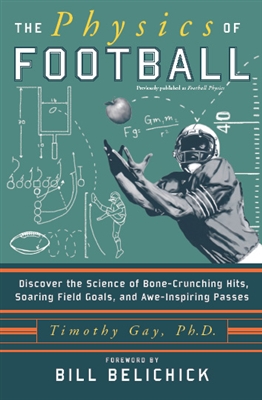
Kinematics - The Science of Football

I'll bet you never thought to see a post about football on a science blog. Actually, there is huge amount of math, physics, and materials science in most sports including football. There have even been books written about the subject.

Today I watched a National Science Foundation video on the Science of Football: Kinematics

Give it a look. The breakdown of speed, velocity, direction and how they all work together is explained simply and is easy to understand. A running back was videotaped so trainers and scientists could see how top velocity might be reached faster. Successful running backs study acceleration, velocity, size, and other parameters to compete more successfully and reach the end zone ahead of the competition.  

You might also like to check out Carla McClafferty's new book on football, head injuries, and all the research going into the health aspects of the sport for young athletes and adults.

There is a lot more to playing football than stadium dogs, snow cones and peanuts. Go science!

Wednesday, August 21, 2013

All Science All the Time...

Many of you have probably heard me say "all science all the time..." fairly often.

Trained as a microbiologist, I was originally on the pre-med path when I took my first microbiology class. The instant I looked through a microscope at the unseen universe of microorganisms, I was hooked!

It's no wonder then that I changed my major and got an advanced degree in microbiology and immunology. I love it! Plus, I really enjoy sharing science info, images, videos, etc with children and adults. 

I do that via my books and Pinterest. Come check out all the fantastic animals, insects, element videos, science education handouts, and more at http://pinterest.com/sciwhisperer/. If you're on Pinterest, let's definitely connect. Go Science!!

Wednesday, August 14, 2013

Science Videos in School

When I was in school, having a film during class was a treat. Usually it was because the regular teacher was out, but sometimes films were used to augment curriculum. 

These days, videos are a staple in our culture. YouTube has experienced logarithmic growth. Teaching methods also use video more as science, technology, engineering and math (STEM) concepts especially benefit from video. Videos are able to show an experiment that would take too long in one class period or are too dangerous to demonstrate. 

I love the University of Nottingham videos on each of the elements in the Periodic Table. They are fun and offer examples of each element, their uses, and often a reaction. I also enjoy the Symphony of Science videos like "We Are Star Dust" by Neil DeGrasse Tyson that I've pinned with many other educational videos to my Cool Science Videos Pinterest board. Check it out and share some of your favorites.

If you're a teacher, I have Pinterest boards for Science Education, Science and Nature, Space and NASA, Robots, and Architecture and Design, to name a few. I use Pinterest as an online, visual filing system for cool websites, articles, concepts, and images. Stop by if you are exploring Pinterest and say hello.
Go science!